Astronomy White Mountains Arizona
For centuries, humanity has looked to the night sky with wonder and awe. From ancient navigators charting courses by the stars to modern astronomers probing the depths of the universe, the celestial sphere has always held a profound allure. Yet, in our increasingly urbanized world, the brilliance of the cosmos is often masked by a pervasive glow – light pollution. But there remain sanctuaries, places where the veil of artificial light is lifted, revealing the universe in all its unfiltered glory. One such extraordinary haven lies nestled in the high-altitude embrace of Arizona’s White Mountains. Astronomy White Mountains Arizona
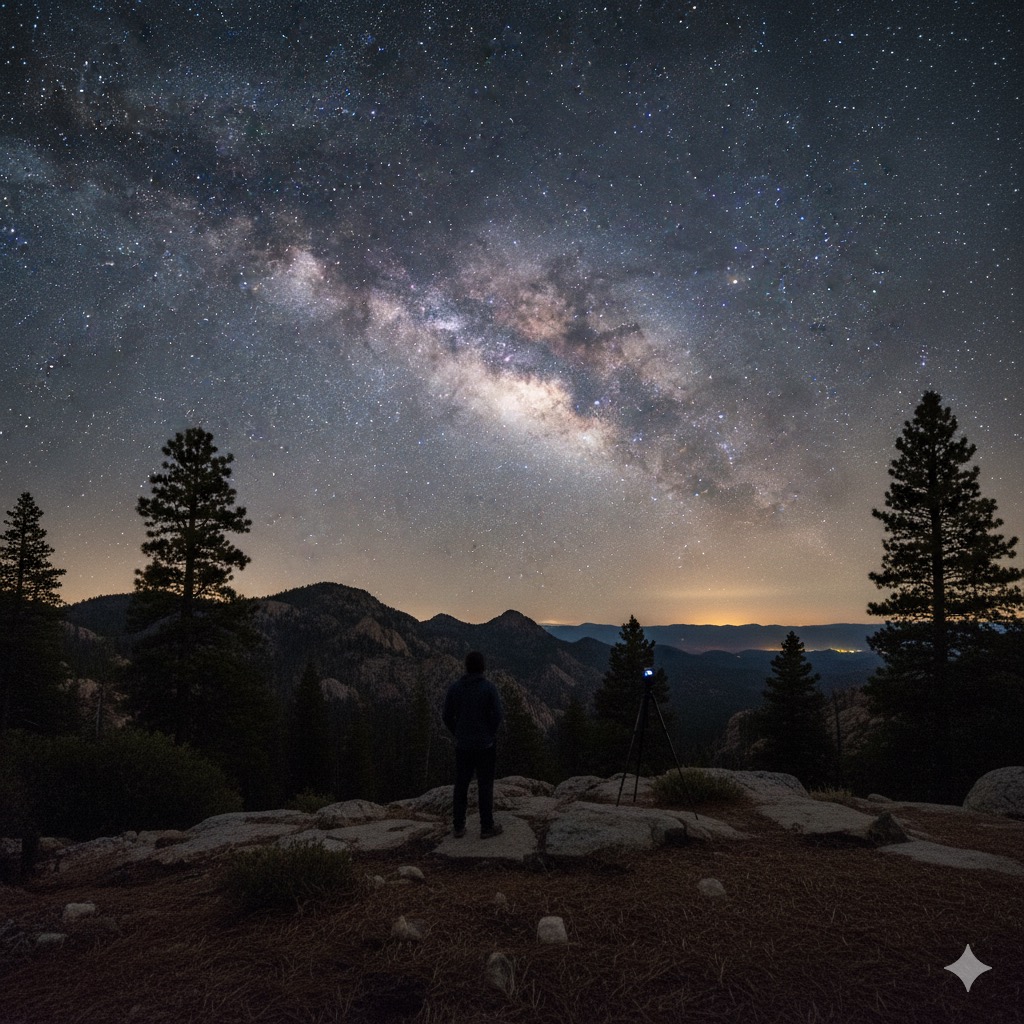
Imagine stepping out into a cool, crisp evening, the air imbued with the invigorating scent of ponderosa pine. As your eyes adjust, a spectacle unfolds above you, unlike anything you’ve witnessed before. This isn’t just a handful of twinkling dots; this is a tapestry woven from countless stars, a vibrant cosmic panorama that seems to stretch into infinity. This is the magic of astronomy in the White Mountains of Arizona.
A Beacon of Darkness: Why the White Mountains Shine for Stargazers
The primary ingredient for exceptional stargazing is simple: darkness. And the White Mountains deliver this in abundance. Far removed from the sprawling metropolitan areas of Phoenix and Tucson, this region boasts some of the darkest skies in the continental United States. The low population density, coupled with a proactive community commitment to minimizing light pollution, creates an environment where celestial objects that are mere whispers elsewhere become roaring declarations here. This lack of ambient light means that even faint nebulae and distant galaxies, typically requiring powerful telescopes and specialized filters, can be glimpsed with remarkable clarity.
Beyond the absence of light, the White Mountains offer another crucial advantage: altitude. Ranging from elevations of 6,000 to over 11,000 feet, the air here is significantly thinner and drier than at lower elevations. This translates to less atmospheric turbulence and fewer dust particles, both of which can distort and scatter starlight. The result is consistently “crisp” viewing conditions, allowing for sharper images of celestial objects, whether you’re using just your naked eyes, a pair of binoculars, or a sophisticated telescope.
And let’s not forget the sensory experience. The clean, cool air, often carrying the unmistakable aroma of pine and juniper, adds another layer to the enchantment. It’s an immersive experience, a symphony for the senses where the visual grandeur of the cosmos is complemented by the refreshing embrace of nature. This unique combination makes the White Mountains not just a place to see stars, but a place to truly connect with the universe.
Navigating the Night: Visible Constellations and Stellar Wonders
With such pristine conditions, the White Mountains become an open-air observatory where constellations come alive. Depending on the season, a magnificent array of stellar patterns can be effortlessly identified.
During the summer months, the iconic Sagittarius and Scorpius dominate the southern sky. Sagittarius, often depicted as a centaur archer, marks the direction of the Milky Way’s galactic center, making it a prime location for spotting dense star fields and nebulae. Scorpius, with its distinctive J-shape and the brilliant red supergiant Antares at its heart, is a breathtaking sight. Higher overhead, the Summer Triangle – formed by the bright stars Vega (in Lyra), Deneb (in Cygnus), and Altair (in Aquila) – serves as a celestial roadmap, guiding observers to rich areas of the Milky Way.
As autumn descends, the magnificent Pegasus, the winged horse, strides across the sky, accompanied by Andromeda, home to our nearest galactic neighbor. The constellation Cassiopeia, easily recognizable by its “W” or “M” shape, rotates around the North Star, Polaris, throughout the year.
Winter skies in the White Mountains are particularly spectacular. The reigning monarch is undoubtedly Orion the Hunter, a truly majestic constellation with its bright stars Betelgeuse and Rigel, and the unmistakable Orion Nebula, a stellar nursery visible even to the naked eye as a fuzzy patch below Orion’s belt. Surrounding Orion, you’ll find other celestial gems like Taurus the Bull with its fiery red eye, Aldebaran, and the enchanting Pleiades (Seven Sisters) star cluster, a sparkling jewel box of young stars. Canis Major, home to Sirius, the brightest star in the night sky, gleams intensely, adding to the winter wonderland.
Spring brings constellations like Leo the Lion, with its distinctive “Sickle” asterism, and Ursa Major (the Big Dipper), a perennial favorite that serves as a useful pointer to Polaris and other constellations.
Beyond these well-known patterns, countless other constellations, often overlooked in light-polluted areas, become strikingly apparent here, inviting exploration and discovery.
A Glimpse into the Deep: Galaxies Beyond Our Own
While constellations trace the familiar patterns of stars within our own galaxy, the truly dark skies of the White Mountains offer a portal to something far grander: other galaxies. With a decent pair of binoculars or a small telescope, the iconic Andromeda Galaxy (M31) is a breathtaking sight. Appearing as a fuzzy oval patch to the naked eye in truly dark conditions, optical aid reveals its vast spiral arms, a distinct island universe of billions of stars, hurtling towards our own Milky Way.
But Andromeda is just the beginning. The Triangulum Galaxy (M33), another spiral galaxy, can also be spotted, albeit fainter. Through telescopes, observers can begin to resolve numerous other fainter galaxies, each a distant metropolis of stars, revealing the sheer scale and complexity of the universe. The experience of seeing the light from a galaxy millions of light-years away, knowing that light began its journey before humans even walked the Earth, is profoundly humbling and awe-inspiring.
Astronomy Outdoors
Astronomy White Mountains Arizona
The Majestic Ribbon: The Milky Way in Full Glory
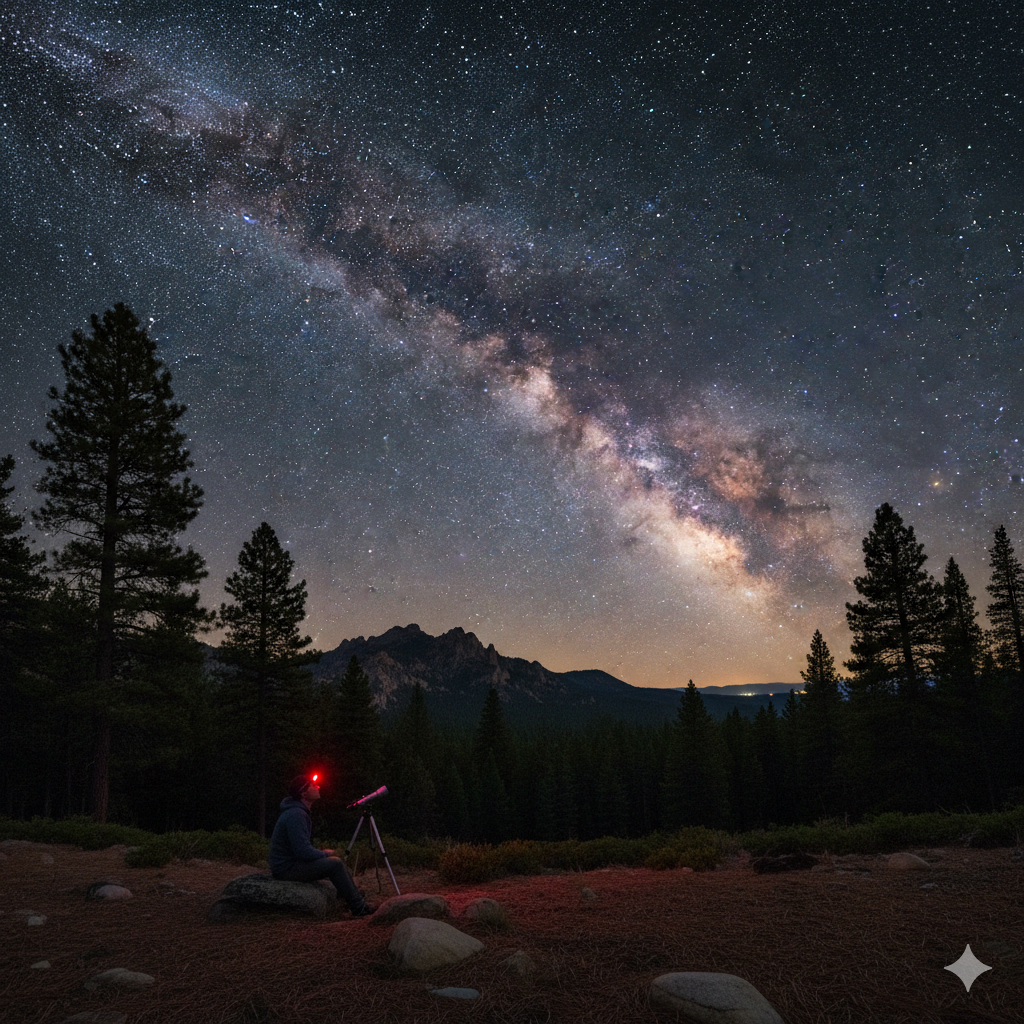
Perhaps the most universally sought-after sight in dark sky locations is our own home galaxy, the Milky Way. In areas suffering from light pollution, the Milky Way is often reduced to a faint, indistinct smudge, if visible at all. But in the White Mountains, it explodes into a magnificent, luminous river of stars stretching across the entire night sky.
From horizon to horizon, the central band of the Milky Way appears as a vast, creamy swath, punctuated by countless individual stars that seem to spill like cosmic glitter. Dark lanes of interstellar dust and gas create intriguing patterns within this luminous band, often referred to as “dark nebulae,” where new stars are forming.
Looking towards the galactic core in Sagittarius during the summer months is particularly rewarding. Here, the Milky Way’s brilliance is at its peak, appearing almost three-dimensional as dense star fields and bright nebulae like the Lagoon Nebula (M8) and the Trifid Nebula (M20) are easily observable. It’s a view that can bring tears to the eyes of seasoned astronomers and novice stargazers alike, a powerful reminder of our place within a much larger, incredibly beautiful cosmic structure.
Practical Tips for Your White Mountains Stargazing Adventure
To make the most of your astronomical journey in the White Mountains, consider these tips:
1. Check the Moon Phase: The moon, while beautiful, is a significant source of natural light pollution. Plan your trip around a new moon phase for the darkest skies.
2. Dress Warmly: Even in summer, nights at high altitude can be surprisingly cool. Layered clothing, hats, and gloves are essential.
3. Red Light Only: White light can destroy your night vision, which takes 20-30 minutes to fully adapt. Use a red-light flashlight or cover your regular flashlight with red cellophane.
4. Bring Binoculars or a Telescope: While the naked-eye views are stunning, binoculars will enhance your experience by revealing fainter objects and resolving star clusters. A telescope will open up even more distant wonders.
5. Use a Star Chart or App: Familiarize yourself with the constellations and plan what you want to observe. Many excellent astronomy apps can help you identify objects in real-time.
6. Find a Dark Spot: While the entire region is dark, specific spots like designated campgrounds, forest roads (check for accessibility), or overlooks will offer the best unobstructed views. Look for locations away from any small town lights.
7. Be Patient: Allow your eyes time to adjust to the darkness. The longer you wait, the more the universe will reveal itself.
Preserving the Darkness: A Community Effort
The continued availability of these pristine dark skies is not by accident. It is the result of conscious efforts by local communities, residents, and environmental organizations to mitigate light pollution. Adherence to dark-sky friendly lighting ordinances, education campaigns, and a general appreciation for the natural night environment play a crucial role. When you visit, be mindful of your own light usage to help preserve this precious resource for future generations of stargazers.
Conclusion
Astronomy White Mountains Arizona offers more than just scenic beauty and outdoor adventure during the day. As night falls, they transform into one of the most magnificent natural observatories on Earth. Here, the absence of light pollution, combined with the clear, high-altitude air, creates an unparalleled opportunity to connect with the cosmos. From the familiar patterns of constellations to the majestic sweep of the Milky Way and the ethereal glow of distant galaxies, the universe unveils itself in breathtaking detail.
Whether you’re a seasoned astronomer or simply a curious soul seeking a deeper connection to the natural world, a stargazing adventure in the White Mountains is an experience that promises wonder, inspiration, and a profound sense of perspective. Pack your bags, look up, and prepare to be utterly captivated by the infinite beauty that awaits in Arizona’s own celestial sanctuary.
Astronomy White Mountains Arizona
Koda Hollow Development